Curriculum Subjects
**This page is under construction**
Philosophy, Vision and Intent: “What do our students need to know and do in order to become educated and what sort of knowledge do our students need in order to thrive and shape the world?”
Art
The Art & Design department has the specialist staff, facilities and resources to provide opportunities for pupils to increasingly develop their creative confidence, through being taught different ways in which they can design and develop a range of creative outcomes and personal ideas.
Pupils should learn how to make individual choices, improve their creative and technical skills and gain mastery of specific techniques as they increase proficiency in the execution of their techniques.
They are taught how to broaden their critical and technical language and develop an appreciation of the contributions of significant artists, designers, architects and craftspeople. This understanding can be used to inform specific developments and improvements in their own work.
The themes and projects set are subject to change in order that we can respond to whole school developments or involvement in community projects, competitions, exhibitions etc.
KS3 Art
At Key stage 3 pupils are taught:
- To use a range of techniques to record their observations in sketchbooks and other media as a basis for exploring their ideas.
- To use a range of techniques and media, including drawing, painting, printmaking and 3D to increase their proficiency in the handling of different materials.
- To analyse and evaluate their own work, and that of others, in order to strengthen their understanding and the visual impact or applications of their work.
- About the history or context of art, craft & design, including styles and major movements from different times and cultures up to the present day.
|
Year 7 |
Year 8 |
Year 9 |
|---|---|---|
| Typical projects relate to THEMSELVES & NATURE | Typical projects relate to HUMANS & ANIMALS | Typical projects relate to SOCIETY & THE BUILT ENVIRONMENT |
|
Emphasis on: Tone, Colour |
Emphasis on: Texture, Colour, Form, Shape |
Emphasis on: Pattern, Abstraction, Perspective, depth |
| Self-portrait |
Africa project: African pots / Ndebele |
Buildings / Architecture |
|
Animals |
Urban / Local Landscape |
|
3D work eg. Faberge Eggs, Decorative Pots, with own designs |
Movement |
|
|
Introducing Key Words |
Human Figure |
|
|
|
|
|
|
Contextual Studies
|
Contextual studies:
|
Contextual studies:
|
KS4 GCSE Art & Design
Click here for the Edexcel Art & Design GCSE webpage
Please see below for the KS4 GCSE Edexcel Art Specification 1FA0.
The Art GCSE course offers students the opportunity to develop their creative ideas and practical skills in a variety of ways. Painting, drawing, collage printmaking, textiles, ceramics and sculpture are the main areas of activity alongside studying the work of other artists. The projects are more open-ended than at KS3 and allow the students to explore more individual ideas and particular techniques, but are linked by the overarching theme of SIMILARITIES and DIFFERENCES.
Students are expected to keep a sketchbook or work journal that supports each project and should be able to continue work at home. All coursework and the mock exam work completed in years 10 and 11 become their personal portfolio and contribute to the final GCSE grade.
In Year 11, from January onwards, students work on their externally set exam assignment and prepare for their final exhibition.
It is essential that all four Assessment Objectives are met by each unit of work and the final GCSE grade is weighted as follows:
- 60% Personal Portfolio
- 40% on the Externally Set Assignment

Classical Civilisation
Classical Civilisation gives students an exciting opportunity to understand the social, historical and cultural contexts of the classical world (Ancient Greece and Rome), and its impact and legacy today, through the study of a variety of literature and visual materials.
KS4 Classical Civilisation
| Year 10 | Year 11 |
|
|
Please click here for the OCR Classical Civilisation website.

KS4 GCSE Classical Civilisation Specification (J199)

Computer Science
As well as learning how to write a computer program, at key stage 3 students will also learn about how computers work. Students will use ICT to develop and present ideas as well as organise and manage data. Finally, students will learn about the importance of being safe when using technology and know how to select accurate information when searching online.
KS3 Computing
|
Year 7 |
Year 8 |
Year 9 |
|
|
|
KS4 GCSE Computer Science
Students will develop their understanding of computer systems, hardware, software, communications, networks and Python programming.
Students who enjoy problem solving and programming will enjoy this course. Students would benefit from having a strong mathematical and logical background, ideally achieving secure or above at the end of KS3.
Grades 1 to 9 are awarded and assessment consists of two written examinations.
The topics covered over the course are listed below:
|
Component 01 Computer systems |
Component 02 Computational thinking, algorithms and programming |
|
|
Design & Technology
In Years 7, 8 and 9 students explore various materials and their properties through the use of specialist tools, equipment and machinery.
This is linked to the study of new and emerging technologies and understanding how the past inspires tomorrow. Computer Aided Design is used to help students develop and model their ideas, where products are then tested and evaluated for their intended user.
Year 9 investigate the “Impact of light” combined with the challenges of how we utilise space where we live and work. Students’ learning links in to industrial methods in the design and making of their prototype.
KS3 Design & Technology
At KS3 students are taught the following:
- Identifying Health & Safety symbols and the importance of risk and responsibility in the workshop.
- How to safely use a variety of hand tools, equipment and machinery.
- Identify the properties and characteristics of a range of materials including: wood, metals and polymers.
- To research and analyse the work of others to understand how ideas and innovation can be explored.
- Explore Computer Aided Design and how it links to industry.
- Students are encouraged to experiment with ideas and not be afraid of making mistakes: “It’s how we learn.”
- Career links and where Design & Technology can take you further.
|
Year 7 |
Year 8 |
Year 9 |
|---|---|---|
| Health & Safety | Movements in Design | Understanding Consumer Needs |
| 2D to 3D Modelling | Techniques and Processes | Importance of Prototypes |
|
Exploring the relationship between nature and design |
Exploring Metals and Plastics | Electronics |
| Properties of wood | Jewellery | Links to industrial skills |
| Development of a light product |
KS4 Design & Technology
We live in a world of developing technologies, where curiosity and discovery go hand in hand, to meet the needs of humans and improve the systems and products we use.
Studying Design and Technology is an opportunity for students to explore ideas, research from the past and creatively think of how lives can be improved in the future, through investigating, designing and the making of their own prototypes.
These objectives are met in the units studied by students in Year 10:
- Design and Technology in our world
- Smart materials
- Electronic systems and programmable components
- Materials (paper & boards, timber, metal, polymers and textiles)
The importance of cross-curricular links to STEM (Science, Technology, Engineering and Maths) principles are also strengthened within the course.
In the summer term of Year 10, the exam board Eduqas releases the “Contextual Challenge” for Component 2. This will provide students with the freedom and opportunity to really explore possibilities around research, design innovation plus analytical skills and their making.
Assessment
- 50% non-examined assessment (NEA) project
- 50% written examination
Progression routes
The study of Design and Technology can lead to future careers in architecture, engineering, product, fashion and interior design, medicine, aeronautics ... in fact anywhere you choose to apply it!
KS4 GCSE Design & Technology Specification (C600QS)
Drama
The Drama Department focuses on rehearsed, improvisation and text work. Students have the opportunity to develop characterisation as well as directing skills with the aim of focussing on the preparation / the process of developing drama as well as the performance in the GCSE course.
KS3 Drama
Drama is taught for one lesson per fortnight in Year 7, 8 and 9.Students also have the opportunity to attend extra-curricular activities to further develop their interest in performance; the Lower School Drama Club put on performances in the summer term.
A selection of projects studied is listed below:
| Year 7 | Year 8 | Year 9 |
|
|
|
KS4 Drama
The course is EDEXCEL GCSE Drama.
The course focuses upon both improvisation / devising and text work. Students are expected to learn lines and contribute to rehearsed performances that will be developed during lesson times but will be shown to outside audiences as part of their coursework.
Candidates have to study one modern play (post-2000) and one pre-1954 play. Students will also have the opportunity to explore the technical aspects of performance and are expected to attend field visits to the Southbank (the National Theatre and the Globe), Covent Garden and the West End.
Visits to the theatre are part of the course and form part of the written examination. Although the course is largely practical it should be noted that the written component is a public examination forming 40% of the final grade.
The course is suitable for those students who enjoy performing and directing and are interested in all aspects of performance from lighting and sound to make up and costume design as well as developing critical analysis and evaluation skills.
|
Component 1 |
Component 2 |
Component 3 |
|
|
|
|
|
|
|
|
|
English
The English Department is a large one with specialist, energetic and enthusiastic staff. We believe that our role is to guide each student to develop her Reading and Writing, Speaking and Listening skills to the highest potential and to help her to develop as an independent, thinking and questioning learner. We strive to inspire enjoyment of the subject through Schemes of Work which we create together, as well as through a broad and varied programme of activities beyond the classroom.
KS3 English
Every class will also have reading lessons as part of the English curriculum. In these sessions students have the opportunity to independently read and discuss their reading with the class and teacher. Students will also be provided with an accompanying reading booklet with a range of fiction and non-fiction extracts for the class to explore. These lessons also provide the opportunity to track reading and to share reading recommendations.
| Year 7 |
|
| Year 8 |
|
| Year 9 |
|
KS4 English
The good practice established in Years 7-9, such as wide individual reading, thorough planning, and checking of work, as well as producing accurate work under exam conditions, remains vitally important for success in the subject.
All students study for 2 GCSEs in English and English Literature, through one integrated course.
Throughout the course students will work to further develop their skills in Speaking, Listening, Reading and Writing. Work on Literature covering a range of periods and genres will also be assessed.
These courses are assessed by examination and will be graded on a 9 point scale where 9 is the highest grade.
Please click here for the AQA English Language webpage.
Please click here for the AQA English Literature webpage.


Film Studies
Film Studies is an engaging and exciting subject that gives students an opportunity to develop a critical perspective on this popular medium and the role it plays within contemporary society. Students gain an appreciation of film as an art form in terms of its visual storytelling, whilst also exploring how values, attitudes, ideas, and beliefs are communicated in film.
Students are introduced to key academic theories in relation to film including aesthetics, representation, ideology, genre and auteurism. We study films from a broad range of historical and cultural contexts as well as different genres and students develop their critical thinking and analytical skills to write perceptive and thoughtful personal responses to film. All our courses also incorporate a creative production element where students will be able to put what they have learnt into practice by making a short film or writing a screenplay.
KS4 Film Studies
Please click here for Eduqas Film Studies website

Geography
Pupils will have the opportunity to explore a range of fascinating places and issues that bring together a strong understanding of the Earth’s key physical and human processes.
KS3 Geography
Pupils will have the opportunity to explore a range of fascinating places and issues that bring together a strong understanding of the Earth’s key physical and human processes. Through a variety of contemporary topics, pupils will learn about the unique features of different environments, and how human actions can affect such places, using problem solving skills to consider how these threats can be minimised.
Pupils will have an opportunity to work independently, in groups and through fieldwork to help develop a variety of skills. Above all, the key stage 3 curriculum has been designed to develop pupils’ curiosity and fascination about the world and its people that will hopefully remain with them for the rest of their lives.
|
Year 7 |
Year 8 |
Year 9 |
|---|---|---|
|
|
|
KS4 GCSE Geography
Geography helps us to make sense of the world and gives us the chance to get to grips with some of the big questions that affect us.
Geography is taught through a range of accessible and engaging topics – providing a stimulating blend of traditional and contemporary Geography to suit students of all abilities. This popular course covers the study of physical and human Geography and focuses on physical processes that produce diverse and dynamic landscapes over time.
Fieldwork is an essential part of the course, providing students with a brilliant opportunity to experience some of the things they have learnt about in class, seeing things differently and, of course, having fun. Students have the opportunity to visit Stratford to undertake human fieldwork and Epping Forest to undertake physical fieldwork.
What skills will students develop?
The study of this course will give students the opportunity to develop communication skills, graphical and cartographical skills, technological skills including ICT and Geographical Information Systems, interpersonal skills through debate and discussion, literacy and numeracy skills – continually developed through written questions and problem solving skills. Enquiry based learning is at the forefront of the teaching of the subject, therefore allowing the opportunity for personalised and independent learning. Students are also encouraged to understand their role in society, by considering different viewpoints, values and attitudes.
This variety makes Geography a highly respected, successful and popular course.
Course Content
Students will be awarded the AQA (A) GCSE.

Health & Social Care
BTEC Level 1/2 Tech Award in Health and Social Care has been developed to provide an engaging introduction to the health and social care sector. It has been specifically designed for young people aged 14 to 19 who may wish to explore a vocational route through key stage 4. It will give students the opportunity to gain a broad understanding and knowledge of the health and social care sector and to develop a range of personal and work related skills. Students will achieve a nationally recognised level 1/ 2 health and social care qualification which will support progression into a more specialised level 3 vocational or academic course.
KS4 Health & Social Care
Please click here for the Edexcel Health and Social Care Webpage.
Assessment
There are three units studied over two years:
Year 10 Component 1
- Unit 1: Human growth development assessed through coursework
- Unit 2: Health and social care values assessed through coursework
Year 11 Component 2
- Unit 3: Health and wellbeing which will be assessed through an externally set and marked assignment
Progression:
- Level 3 Vocational qualifications
- A level related qualifications
- Apprenticeships within the health and social care sector
Students who achieve the qualification at Level 1 may progress to the Level 2 Health & Social Care or other vocational Level 2 qualifications.

History
KS3 History
In Year 7, students are introduced to History by completing the Blue Plaque Project, with a key focus on Black History and local historical significance. They then study England pre-1066 and the Norman Conquest, before exploring the Kingdom of Benin, the Middle Ages, and the Crusades. Throughout the year, students develop a secure understanding of chronology, cause and consequence, and historical evidence, while engaging with a diverse range of societies, beliefs, and experiences in line with the National Curriculum.
In Year 8, students begin by studying the power and weaknesses of the Tudor monarchs during a period of significant religious change. Black Tudors and Tudor women are fully integrated within this topic, allowing students to explore diversity and power in Tudor England. Alongside this, students study Mughal India, making comparisons and contrasts between Mughal rulers and the Tudor monarchy. In their second topic, students examine the causes of the English Civil War, focusing on political, religious, and social tensions. Alongside this, they explore London during the Age of the Enlightenment, considering how new ideas challenged traditional authority. For their third topic, students study the Transatlantic Enslavement, developing an understanding of a complex, sensitive, and challenging history, and its lasting legacy in modern British society. In the fourth and final topic, students learn about the changes and impact of the Industrial Revolution on living and working conditions in Great Britain. Alongside this, students study key inventions and consider how technological change transformed society.
In Year 9, students are taught about the British Empire, with a specific focus on scholarly works. They then move onto the complexity of the causes of the First World War. Alongside this, students are taught about the experiences in the Trenches, with Case Studies on diversity and the international perspective of the war. For their third topic, students are taught about how democratic Great Britain was and the reasons why women won the right to vote. For their fourth topic students are taught about the diverse reasons why different ethnic groups migrated to the British Isles and the importance it has had. For their final topic, students are taught about Germany after World War I, the rise of Hitler and the Holocaust. Alongside this, students are taught about the Rise of Hitler through source analysis and how we remember the Holocaust.
| Year 7 |
|
1. The Blue Plaque project where students research the significance of chosen individual. 2.Life in Britain before 1066, the Bronze Age, Iron Age, and Roman Britain, with a focus on similarities, differences, and key turning points. 3.The Norman Conquest and the battles of 1066, examining why 3 contenders claimed the English throne. 4.The Kingdom of Benin, exploring how advanced and sophisticated the kingdom was. 5.The Crusades, investigating the different causes that led to it. |
| Year 8 |
|
1a. The religious changes that took place under the Tudors.
1b. The contributions made by the Mughals, alongside comparing the rulers to the Tudor monarchs.
2a. The English Civil War; exploring the different causes that led to it, alongside the relationship between the monarch and Parliament.
2b. London in the Age of Enlightenment.
3. Trans-Atlantic Enslavement, with a focus on how enslaved people resisted / rebelled.
4a. The Industrial Revolution; including living and working conditions, impact on women and children.
4b. The role of inventors and the impact of the inventions. |
| Year 9 |
|
1a. The British Empire, with a focus on why the Empire expanded in the 1800s.
1b. The Historiography of the British Empire and understanding how it has been interpreted.
2a. The complex long and short term causes of the First World War.
2b. Case studies exploring how Black and LGBTQ+ individuals, as well as citizens of Enfield, contributed during the First World War.
3. Democracy and female suffrage (women did get the vote).
4. Migration to the British Isles.
5. What was the Holocaust and why did it happen? |
KS4 GCSE History
At GCSE, students follow the Edexcel History specification. Students are externally assessed in all units at the end of Year 11.
Please click here for the Edexcel History website.
| Paper 1 |
|
Option 11: Medicine in Britain, 1250–present and The British sector of the Western Front, 1914–18
SECTION A – Western Front, focus on sources.
SECTION B – Medicine through Time in Britain Key Topic 1: Medieval, c.1250-1500
Key Topic 2: Renaissance, 1500-1700
Key Topic 3: Industrial, 1700-1900
Key Topic 4: Modern, 1900-present day
Some examples of what students will study for Paper 1:
• Ideas about the causes of disease over time (religion, science, germs)
• Medical treatments and prevention from medieval to modern Britain
• Key individuals (e.g. Vesalius, Jenner, Pasteur, Fleming)
• Public health developments, including sanitation and vaccination
• Medical care and surgery on the Western Front.
• Conditions in trenches and treatment of wounded soldiers
|
| Paper 2 |
|
Option B4: Early Elizabethan England, 1558–88
Key Topic 1: Queen, Government and Religion, 1558 - 1569
Key Topic 2: Challenges to Elizabeth at home and abroad from 1569 - 1588
Key Topic 3: Elizabethan Society in the Age of Exploration, 1558 - 88
Some examples of what students will study for Paper 2:
• Elizabeth I’s background, legitimacy, and early problems
• Religious Settlement and challenges from Catholics and Puritans
• Threats to Elizabeth’s rule, including Mary Queen of Scots and plots.
• Relations with Spain and causes of conflict
• The Spanish Armada and its significance
• Elizabethan society, poverty, and the “Golden Age”
|
| Paper 2 |
|
Option P1: Spain and the New World, 1490-1555
Key Topic 1: Spain reaches the Americas, c1490 - 1512
Key Topic 2: The Conquistadors, 1513 - 1528
Key Topic 3: The Spanish Empire, c1528 – c1555
Some examples of what students will study for Paper 2:
• Spanish exploration of the New World and motives for expansion (gold, glory, God)
• Key explorers and conquistadors, including Columbus and Cortés
• Encounters between the Spanish and indigenous peoples (Aztecs and Incas)
• The impact of conquest on Indigenous peoples (disease, violence, religion)
• How Spain ruled and controlled the New World
• Consequences of exploration for Spain and the Americas. Positive / negative / short / long term.
|
| Paper 3 |
|
Option 34: Weimar and Nazi Germany, 1918-39
Key Topic 1: Weimar and Nazi Germany, 1918-1929
Key Topic 2: Hitler’s rise to power, 1919-33
Key Topic 3: Nazi Control and Dictatorship, 1933-39
Key Topic 4: Life in Nazi Germany, 1933-39
Some examples of what students will study for Paper 3:
• The impact of the First World War and the creation of the Weimar Republic
• Political, economic, and social problems in Germany (1919–23)
• Recovery under Stresemann and ongoing weaknesses
• The rise of Hitler and the Nazi Party
• How Hitler became a dictator
• Life in Nazi Germany, including control, propaganda, and persecution
|

Mathematics
KS3 Mathematics
At ECSfG, Year 7 and 8 students follow the KS3 Pearsons schemes of work which provides them with a solid foundation in preparation for their GCSEs. Through these years, they build upon the concepts studied at KS2 and are taught to develop fluency, reason mathematically and solve problems.
Our students are taught in ability groups based on their KS2 SATS results and a baseline test that they sit early on in Year 7. The setting system allows us to tailor our teaching to the needs of our students, enabling them to make maximum progress. Assessments and Core Tasks are completed regularly to help us monitor progress and re-set students where necessary.
At the beginning of the year, all students are given access to Mathswatch, a comprehensive online platform with a range of videos on all topics in the curriculum and interactive questions for the students to attempt. Homework is quite often set on Mathswatch.
Please find the overview of the curriculum below:
KS4 GCSE Mathematics
Edexcel 1MA1 in Mathematics
- Please click here for the Edexcel Pearson Mathematics webpage.
- Please see the Edexcel specification below.
- It is compulsory that every pupil studies Mathematics in Year 10 and Year 11.
Course Outline
This GCSE is offered to all the pupils and has two tiers:
- Higher tier (awarding grades 4 to 9).
- Foundation tier (awarding grades 1 to 5).
This is a three year course that is started in Year 9. The final exam takes place in May/June of Year 11. There is no coursework or controlled assessment requirement for GCSE Mathematics.
Assessment
Both Higher and Foundation tiers will be assessed in the summer of Year 11 through:
- One Non-Calculator Paper
- Two Calculator Papers
All exams are equally weighted. Each exam takes 1 hour 30 minutes and is worth 80 marks.
Is GCSE mathematics required to study A level mathematics?
In order to study A level mathematics - only those pupils who achieve a grade 7 or above for GCSE mathematics and have come from one of the Set 1 groups could be considered.
In order to study A level further mathematics - only those pupils who study A level mathematics and come from Set 1 with GCSE grade 8 or 9 could be considered.

Modern Foreign Languages (MFL): French, Latin, Spanish
“If you talk to a man in a language he understands, it goes to his head, if you talk to a man in his own language, it goes to his heart” – Nelson Mandela
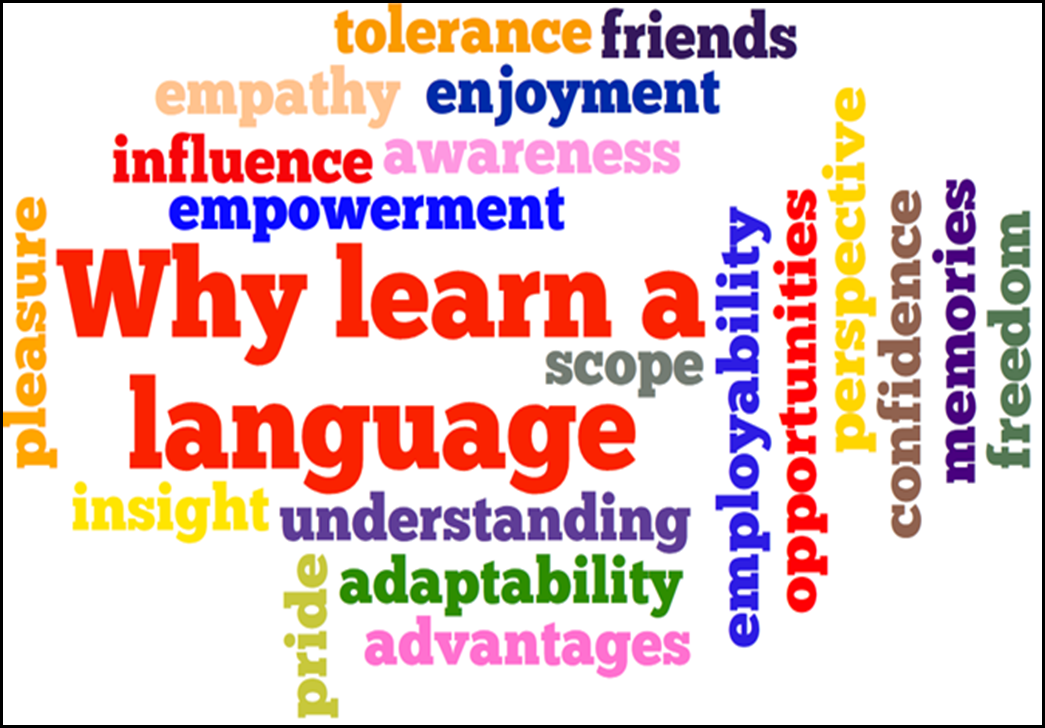 Why Learn a Foreign Language?
Languages foster a natural curiosity to explore other countries, cultures and customs and to communicate clearly and confidently. Learning a foreign language gives you access to more of the world and uncovers new ways of seeing the world. Speaking another language helps you to stand out from the crowd in a multitude of career paths. Foreign language skills provide competitive advantages both for businesses and job seekers.
Modern Foreign Languages at Enfield County School for Girls
At Enfield County School, we value the ability to speak another language in an increasingly global society. Developing the skills of language learning creates opportunities beyond the classroom. In addition to studying French and Spanish, we also offer students whose native language may not be English the opportunity to pursue a qualification in that language. Although not a Modern Foreign Language, the department offers Latin to Key Stage 5 students as an enrichment course.
We aim:
- To offer all students a variety of opportunities to explore and understand a wide range of cultural and social issues through the study of French and Spanish.
- To create in students a love of learning by making learning languages fun and meaningful, providing them with many opportunities for collaboration and independent work in the classroom.
- To encourage a curiosity in other cultures and opportunities for work experience outside the Englishspeaking world.
- To contribute to developing our students as global citizens who understand and tolerate cultural differences and can benefit from the richness of a diverse world.
- To equip our students with a greater appreciation and understanding of other cultures through our annual trips abroad.
KS3 Modern Foreign Languages (MFL) French & Spanish
The Modern Foreign Languages department offer French or Spanish from Year 7. We follow a three-year Key Stage 3 curriculum aimed at providing students with a good grounding in French and Spanish so they can extend their knowledge in later years.
We …
- Deliver an engaging scheme of work that builds knowledge and skills incrementally and allows students to be immersed in the culture and customs of the target language.
- Develop students’ skills in the four key areas of listening, speaking, reading and writing along with providing a solid grounding in the structures and patterns of the language through a range of contexts.
- Encourage our students to use the target language as much as possible in class and expose them to authentic language in French and Spanish
- Teach our students to become increasingly independent learners by providing them with opportunities to extend their learning outside the school through online resources accessible from home.
- Monitor their progress through regular formative and summative assessments.
Curriculum Content (Implementation)
Language Lessons at ECS include opportunities for students:
- to explore the patterns and sounds of language and write phrases from memory
- to adapt create new sentences of their own using models shown in class
- to listen attentively to spoken language, engage in conversations, ask and answer questions, express opinions and respond to those of others
- to write at varying length, for different purposes, using a range of vocabulary and grammatical structures they have learnt
- to express ideas clearly and understand basic grammar in French and Spanish
- to confidently reproduce language learnt verbally and in writing in full sentences, using familiar vocabulary, phrases and basic language structures, developing accurate pronunciation and intonation.
Impact
Our students will …
- have a good understanding and knowledge of vocabulary, grammar and phonics of French and Spanish languages
- have the confidence to use language learnt in class in listening, speaking, reading and writing activities in French and Spanish
- speak a Modern Foreign Language with increasing accuracy and develop as global citizens who understand and appreciate cultural differences and can benefit from the richness of a diverse world.
KS4 Modern Foreign Languages (MFL) French & Spanish
At GCSE, students develop their understanding of a range of themes covered at Key Stage 3 with a greater emphasis on independent learning, vocabulary acquisition, phonics and grammar in French and Spanish.
Students develop metacognitive and independent learning skills using MFL resources provided in class to support them inside and outside the classroom.
This GCSE is linear meaning that students sit all four papers at the end of the course in Year 11. There are two tiers: Foundation Tier (GCSE Grades 1–5) and Higher Tier (GCSE Grades 4–9). Students must take all four papers at the same tier.
Course Content
- Please click here for the New AQA GCSE French (8652) webpage
- Please click here for the New AQA GCSE Spanish (8692) webpage

Modern Foreign Languages (MFL) Statement of Intent
Music
KS3 Music
Music in Years 7, 8 and 9 is overwhelmingly practical, with pupils learning through active composition, listening and performance. The curriculum has been designed so that each topic continues to develop and build on the skills of previous topics, all incorporating musical literacy, notation and evaluation. At this stage however, terminology is ‘caught, not taught’ with the emphasis firmly on learning the Musical Elements of Pitch, Dynamics, Silence, Timbre, Structure, Texture, Tempo and Duration through a range of practical composition and arranging projects, and learning the terminology and literacy after the concept is mastered.
Performance is core throughout all projects. There are many opportunities for performance at Key Stage 3: informally, to their peers in each lesson; formally, in their recorded assessments each half term; school-wide, at assemblies; and publicly, in school events such as our Concerts, International Evening, Graduation Ceremonies, and any other occasions where music is appropriate.
|
Year 7 |
Year 8 |
Year 9 |
|
|
|
KS4 Music
The course will cover five Areas of Study which will be studied using a range of theory classes and practical music-making:
|
1. My Music (student's own instrument/voice)
|
|
2. The Concerto Through Time
|
|
3. Rhythms of the World
|
|
4. Music for Screen
|
|
5. Conventions of Pop
|
Physical Education
Students will have the opportunity to participate in a range of different sporting activities which reflect the programmes of study laid down in the National Curriculum for Physical Education.
It is hoped that the curriculum offered helps to inspire students to succeed and excel in competitive sport and other physically-demanding activities to the best of their ability. We provide opportunities for students to become physically confident in a way which supports their health and fitness as well as learning a range of life-skills including the ability to work in a team, respect and fairness.
KS3 PE
This is our initial opportunity to assess and raise cultural capital within our subject by introducing students to traditional sports from our culture and history and integrate the core values associated with them.
Across the three years we offer a broad and diverse range of physical activities to engage and inspire students to participate in lifelong physical activity.
The curriculum promotes personal development, skill acquisition, teamwork including leadership and effective communication as well promoting a healthy active balanced lifestyle. All our teaching is underpinned with theoretical knowledge and the opportunity for practical application, but most of all we have developed a curriculum that is challenging and fun.
At Enfield County School for Girls we encourage students to be competitive through Sports Days and interform competitions as well as providing the opportunity for students to participate in fixtures against local schools. We have an extensive array of fixtures in a variety of sports which allows us to target a wide range of interests.
| Year 7 | Year 8 | Year 9 |
|---|---|---|
|
Netball Team Building & Football |
Netball Team Building & Football |
Netball Team Building & Volleyball |
|
Basketball Fitness |
Basketball Fitness |
Basketball Fitness |
|
Dance Alternative Sports |
Dance Alternative Sports |
Dance Alternative Sports |
|
Gymnastics Tag Rugby |
Parkour Tag Rugby |
Parkour Badminton |
|
Athletics Rounders |
Athletics Rounders |
Athletics Rounders |
|
Athletics Cricket |
Athletics Cricket |
Sport Ed Sport Ed |
KS4 PE
Physical education is taught as a core subject to all students in Year 10 and 11 but does not lead to a key stage 4 qualification. Lessons offer students the chance to develop and progress as well as to consolidate the skills they have learnt in key stage 3.
Students have access to a broad curriculum with the aim of instilling the importance of adopting a physically active lifestyle. As well as continuing some of the activities they covered in key stage 3, we also offer new sports such as trampolining and table tennis.
At Enfield County School for Girls we encourage students to be competitive through Sports Days and interform competitions as well as providing the opportunity for students to participate in fixtures against local schools. We have an extensive array of fixtures in a variety of sports which allows us to target a wide range of interests.
KS4 GCSE PE
This course builds on theoretical content delivered during practical sessions throughout key stage 3. GCSE PE offers our students an opportunity to continue their love and interest in sport in a more in depth and detailed manner, and it also promotes the endless list of potential sporting endeavours available to student’s post education both recreationally and as paid work.
There are many different GCSE providers and we have opted to go with Pearson Edexcel. Following the recent reforms many of the specifications are very similar, covering the same course content but being assessed in a slightly different way, we feel that we have fantastic knowledge of the Pearson Edexcel course infrastructure and can deliver a tailored, inclusive and accessible course. We have 5 lessons over a fortnight and they are split into theory and practical lessons, with a heavier weight on theory lessons. This reflects the course weighting of 60% theory and 40% Practical.
In year 10, student’s cover Paper 1, Topic 3 which looks at Physical Training in sport, we can adopt a practically element to many of the theoretical topics in year 10 to promote engagement and solidify the learning process. Year 10 is also an opportunity to explore some practical sports, students will engage in a few sports to try and identify the three they will take through for moderation. It is expected that if students want to perform in a particular sport that the school does not offer, they should attend a sports club outside of school. In year 10 we also complete the ‘Personal Exercise Programme’ coursework piece, this starts in year 10 with fitness testing and culminates in year 11 completing the different sections alongside the course content delivered in lesson. We have found that teaching the content at the same time as completing the coursework has been very beneficial for students in their written work and their knowledge recall.
Within the department all of our teachers that have delivered GCSE PE across a number of specifications and exam boards, and that wealth of knowledge and experience has been very useful in creating and delivering a well rounded inclusive GCSE curriculum to the students at Enfield County School for Girls.
PSHCE
PSHE at Enfield County School for Girls teaches our pupils to become responsible citizens; developing their skills both morally and socially to enable them to lead happy, healthy and fulfilled lives.
Our curriculum follows the statutory Department for Education guidance which came into effect in September 2020. This guidance makes it compulsory for all schools to teach sex and relationship education (SRE) as well as health and well-being. Our PSHE policy explains how we do this.
PSHE education is about teaching pupils to make informed and safe decisions and encouraging them to take responsibility for their own lives and their communities. We want our young people to leave school with an understanding and awareness of British society including aspects of political, legal and economic systems.
PSHE is embedded throughout the curriculum as well as delivered in Personal Development lessons (PD), form time, assemblies and sometimes through visiting speakers, workshops and theatre performances. Our aim is that Personal Development is interesting and informative and something that will enhance the lives of all our students, helping them thrive in modern Britain and the wider world.
KS3 PSHCE
| Year 7 |
|
Students have weekly lessons Personal Development lessons which begin in the Autumn term. Students complete a scheme of work based on friendship which enables them to settle in to secondary school and make friends. Following on from this, through the year students will work on various topics including: British values, Diversity and Identity, Puberty, Health and Body Image, Mindfulness and Personal Finance. |
| Year 8 |
|
In year the PSHE curriculum is delivered throughout form time and assemblies. Topics covered include; Well-being and Mindfulness and Positive Friendships. Students in year 8 often have a visiting theatre performance or workshop. The themes of these vary but previous topics have included; Healthy Relationships, E-Safety and Cyberbullying and Mental Health. |
| Year 9 |
|
Students receive fortnightly Personal Development lessons. The topics explored in lessons include: Body image, Relationships and Sex education, Positive relationships, Cybercrime and Money matters. In the Spring term students have the chance to watch a Forum theatre play and take part in a workshop. This workshop will be on Relationships and Sex education. In the Autumn term Year 9 students have the opportunity to take part in the annual Citizenship Foundation Magistrates competition. Students are interviewed for roles including lawyers, magistrates, ushers, legal advisor, witnesses and even the defendant. Once a legal team has been selected they practise to compete in a competition with other schools, whilst learning about the various elements of the legal field. We have always performed really well in this competition, winning our local heat for the past three years, the regional heat for the last two years. |
KS4 PSHCE
At KS4 all students have fortnightly Personal Development (PD) lessons. Personal Development covers the Personal, Social, Health and Economic (PSHE) curriculum as well as the statutory Sex and Relationship Education (SRE) curriculum. We also cover other statutory elements such as well-being and careers education.
At KS4 students also develop a great understanding of current affairs, the news and the wider world; this is delivered through form time activities, assemblies and through wider learning opportunities. All departments contribute to the PSHE curriculum and PD lessons are taught by a range of teachers allowing students to benefit from a range of experience. Staff are trained and supported to teach PD and they see it as a valuable part of the curriculum.
At KS4 students learn to become engaged and active citizens and how to make their way in British society. PD helps our students develop their social, spiritual and cultural education, giving them skills which will help them to make better choices and have more freedoms as they make their way in the world.
PD at KS4 is about enabling our students to take responsibility for their own lives and their communities. We want all students at Enfield County School for Girls to leave school with an understanding of the legal and economic functions of adult society, as well as the social and moral awareness to thrive in it.
| Year 10 |
|
Throughout the year students will work on various topics including: social harmony, drug education, religion and digital awareness. SRE TOPICS AROUND BODY IMAGE, HEALTHY RELATIONSHIPS, CONTRACEPTION, ABORTION AND SEXUALLY TRANSMITTED DISEASE. Topics such as honour based abuse, FGM and extremism will be covered sensitively. Emotional well-being and coping strategies are also taught. |
| Year 11 |
|
At the beginning of Year 11 the focus is on post 16 choices, careers, CV preparation and preparing for the world of work. Students will also cover other topics including: financial capability, female empowerment and discrimination. Topics such as bullying and sexual harassment are covered in detail. Revision strategies, exam stress and preparation are covered throughout the year |
KS5 PSHCE
At KS5, PSHE is delivered through weekly 20 minute form time sessions with a specialised form tutor, through visiting speakers, workshops and sharing information where relevant.
|
Year 12 |
Year 13 |
|
Induction Resources Vision: Thinking about career and life goals |
UCAS Preparation UCAS Applications |
|
Managing mental health: understanding effort, workload and effective study Media literacy and digital resilience November PPEs |
Managing mental health: understanding effort, workload and effective study Exam Skills November PPEs |
|
CV writing and work experience Self-concept and sexual health |
Resilience Further Education |
|
The importance of professional conduct Drugs, Alcohol and Tobacco Healthy Lifestyles March PPEs |
Leadership Skills Preparing to Perfom March PPEs |
|
Beyond Post 16: University Life Apprenticeships Financial choices and management |
Revision in tutorials |
|
UCAS Preparation (Oxbridge Statements) Leadership Skills |
Revision |

Psychology
Why do individuals behave the way they do? How can we investigate differences between people?
For those students with a genuine interest in studying the mind and behaviour and who enjoy exploring issues dealing with how, and why, people behave in certain ways.
KS4 Psychology
Please click here for the GCSE AQA Psychology webpage.
Please see below for the KS4 GCSE AQA Psychology specification 8182.
Course Overview:
Why do individuals behave the way they do? How can we investigate differences between people?
Take your first steps into understanding how the mind works. GCSE Psychology is an opportunity to study the human mind.
By the end of the course you will be able to demonstrate knowledge and understanding of psychological concepts, research studies and theories. You will be able to evaluate psychological ideas and make judgement and draw conclusions.
All course content is based on the AQA exam board.
Topics include:
- Research Methods
- Memory
- Perception
- Development
- Psychological problems
- Social influence
- Language
- Brain
Course Assessment:
GCSE Psychology will be assessed through two written papers at the end of the course.

Religious Studies
KS3 Religious Studies
At Key Stage 3 we explore a variety of faiths, to give pupils an overview of beliefs in the world today and how holding these beliefs affect an individual’s life.
Their progress is monitored through regular assessments and a variety of presentations. We set homework to build upon their knowledge, to develop research skill and to foster enjoyment of the subject.
| Year 7 |
|
| Year 8 |
|
| Year 9 |
|
KS4 Religious Studies
- Please click here for the OCR Religious Studies GSE webpage.
- Specification code: J625
- Qualification number: 601/8594/6
GCSE Religious Studies at KS4 helps to develop the skills already acquired at KS3. Students will study the beliefs, teachings and practices from the Islamic and Christian perspectives as well as Religion, Philosophy and Ethics in the modern world from a Christian perspective.
Religious Studies Course Outline
| Year 10 |
|
Paper One CHRISTIANITY Beliefs and Teachings - Nature of God
Practices - Worship
|
|
Paper Two ISLAM Beliefs and Teachings - Core Beliefs
Practices - The Importance of Practices
|
|
Year 11
|
|
Paper Three Religion, Philosophy and Ethics in the Modern World from a Religious Perspective |
|
|
|
|
Course Assessment
|
Beliefs and teachings & Practices: Christianity |
One hour exam |
25% |
|
Beliefs and teachings & Practices: Islam |
One hour exam |
25% |
|
Religion, philosophy and ethics in the modern world from a religious perspective |
Two hour exam |
50% |
Science
Throughout all year groups in Key Stage 3, students are taught in mixed ability with soft setting through KS4, where we aim to develop scientific knowledge and understanding alongside scientific skills, through practical investigations.
Students’ progress is monitored through regular formative assessments and summative end of module testing.
KS3 Science
Order of Teaching Topics
Particular thought has been put into the order of teaching topics in many areas of our curriculum including:
- Year 7 begin with health and safety and practical skills, as an exciting introduction to secondary school science. Students get to use practical equipment for the first time.
- Working Scientifically: key words are introduced at this point and revisited many times during their science education pathway.
- This is revisited in year 8, to emphasise "disciplinary" skills (how science works/working scientifically ideas). This is interwoven with "substantive" teaching (curriculum/theory/knowledge-based learning or scientific knowledge and conceptual understanding).
Transition Topics into GCSE
Year 9 follow a programme of Transition Topics before starting GCSE topics. This includes:
- Maths skills required for GCSE to provide the foundation for GCSE science.
- Balancing equations which applies these maths skills to an area that will be revisited later in the GCSE course and something that most students find challenging.
- Progression Through Science topic which introduces students to career possibilities (Gatsby benchmark 4), while reflecting on what substantive knowledge has been covered up to this point in their education. It also gives a flavour of what the next steps in their science education will be.
Reading in the Curriculum is interwoven into our schemes of learning.
There is a literacy lesson at the end of each topic where students read selected articles from scientific magazines and complete activities based on the article.
|
Biology |
||
|---|---|---|
| Year 7 | Year 8 | Year 9 |
|
|
|
|
Chemistry |
||
|---|---|---|
| Year 7 | Year 8 | Year 9 |
|
|
|
|
Physics |
||
|---|---|---|
| Year 7 | Year 8 | Year 9 |
|
|
|
KS4 Combined Science GCSE - Trilogy
Please click here for the AQA Combined Science: Trilogy webpage.
Please see below for the KS4 GCSE Combined Science AQA Specification - 8464.
This is a broad and engaging scientific course that will inspire and challenge students of all abilities and aspiration.
Experiments that are specified in the syllabus will be assessed in the written exams that will all be sat at the end of Year 11. Students can sit the Higher or Foundation papers and questions on the paper include multiple-choice, structured, closed, short and open response questions. The exam questions will increase in difficulty on the paper. The topics to be covered include:
| Biology | Chemistry | Physics |
|---|---|---|
|
Cell biology |
Atomic Structure and Periodic Table |
Energy |
|
Organisation |
Bonding, Structure and Properties of Matter |
Electricity |
|
Infection and Response |
Quantitative Chemistry |
Particle Model of Matter |
|
Bioenergetics |
Chemical Changes |
Atomic Structure |
| Homeostasis and Response | Energy Changes | Forces |
| Inheritance, Variation and Evolution | Rate and Extent of Chemical Change | Waves |
| Ecology | Organic Chemistry | Magnetism and Electromagnetism |
| Chemical Analysis | ||
| Chemistry of the Atmosphere | ||
| Using Resources |
- Students will achieve two GCSEs in Science on this course.
- Students will sit six exams: 2x Biology, 2x Chemistry and 2x Physics papers.
- Each paper is 70 marks (16.7% of the whole GCSE) and takes 1 hour 15 minutes.
- There are 21 experiments included in the syllabus that may be assessed in these papers.
Successful completion of the GCSE Combined Science course allows students to progress onto all Post 16 (Level 3) Science qualifications, including A levels. The Combined Science GCSE is recognised and highly regarded by all colleges and universities for all Level 4 courses.
Contact: Ms Hadjidaniel

KS4 Sociology
Sociology studies the society within which we all live. It encourages us to understand and ask questions about many of the things we all take for granted.
Please click here for the AQA Sociology webpage.
Please see below for the KS4 GCSE AQA Sociology Specification 8192.
Course Overview
This course aims to achieve the following:
- Develop an understanding of how individuals and groups relate to each other in society
- Develop skills in gathering, selecting, handling and interpreting information in a range of different formats, including articles, graphs and statistics
- Develop the ability to reflect on one’s own experience of the social world we live in.
In order to study society it is necessary to break it down into sections but we must remember that in real life all these sections are linked together and influence each other.
The topics to be covered in the course are as follows:
|
Core Topics
|
|
A Choice of Four Option Topics
|
|
Themes
|
Textiles
Textiles is an inspiring, rigorous and practical subject. Using creativity and imagination, pupils design and produce products that solve real and relevant problems. Students acquire a broad range of subject knowledge and draw on cross-curricular disciplines becoming resourceful, innovative and enterprising.
KS3 Textiles
Key Stage 3 Textile Design
At Key Stage 3 pupils are taught:
- To use a range of textile techniques to use as a basis for exploring their own design ideas
- To use a range of textile techniques, including tie dye, transfer printing, hand embroidery, stencilling, applique, embellishment and sewing machine skills to increase their proficiency in the handling of different materials & pieces of equipment.
- To analyse and evaluate their own work, and that of others, in order to strengthen their understanding and the visual impact or applications of their work.
- About the history or context of art, craft, fashion & design, including styles and major movements from different times and cultures up to the present day.
| Year 7 | Year 8 | Year 9 |
|---|---|---|
|
|
|

KS4 Textiles Design
Please click here for the KS4 GCSE Edexcel Art and Design: Textile Design Specification 1TE0
The Textile Design GCSE course offers students a versatile subject that involves the creation, selection, manipulation and application of a range of materials such as fibres, yarns and fabrics, and processes such as weaving, knitting, stitching and printing to create designs and products. The projects are more open-ended than at KS3 Textiles and allow the students to explore more individual ideas and particular techniques.
Textiles Design includes the study of art textiles, fashion design & illustration, costume design, printed & dyed textiles, surface pattern, stitched/embellished textiles, soft furnishings/textiles for interiors, digital textiles & installed textiles. Students will study and analyse critically, evaluate and reflect on their own work and the work of textile artists, designers and crafts persons. They will be expected to demonstrate the ability to record ideas, observations, insights and independent judgements visually and through informative written annotations, using suitable specialist vocabulary.
Students will develop and demonstrate a skilful and sensitive command of these techniques and media. A large proportion will be of a practical nature and students will be encouraged to work in an independent manner.
Students are encouraged to work from observation and individual research in order to develop their own ideas and style. Students are expected to keep a sketchbook or work journal that supports each project and should be able to continue work at home. All coursework and the mock exam work completed in years 10 and 11 become their personal portfolio and contribute to the final GCSE grade.
In Year 11, from January onwards, students work on their externally set exam assignment and prepare for their final exhibition.
It is essential that all four Assessment Objectives are met by each unit of work and the final GCSE grade is weighted as follows:
- Component 1 – Personal Investigation: Coursework 60%
- Component 2 – Externally Set Assignment: Exam 40%



Year 7 Resources

Year 8 Resources

Year 9 Resources

The Enhanced Curriculum

EBacc

When EBacc subjects are combined with creative, practical and vocational subjects as GCSE options for all students, we know we are providing knowledge of the modern world and an enjoyment of culture for all in order to support our students to succeed in life outside of our ECSfG community. Over 96% of our Y11s achieve the EBacc, year on year – well above the DfE national expectation of 75% of all students by Sept 2022 and 90% by 2025.
Key Knowledge
At ECSfG, strong discipline means all students are taught in a safe and caring environment, with high expectations and where success and achievement are regularly rewarded and more importantly, celebrated by all.
Our curriculum has been carefully mapped throughout the Key Stages so that our students gain mastery and rich knowledge sequences in their long-term memories.
In all our subjects, precisely identified ‘end points’ for each unit of learning help to embed this deep learning. It is vital that our curriculum gives every student the knowledge they are entitled to as part of their cultural inheritance, as our focus on ‘closing the gap’ continues year on year.
Curriculum Breadth and Balance
The cultural inheritance mentioned above, along with student experiences of our enrichment programme is a key principle in our curriculum design in order to ensure our students have the opportunities of attending a wide range of clubs, intervention sessions, visits of cultural focus and University experiences.
Our students therefore enjoy their learning and can understand how their experiences of all subjects are intertwined in order to have a full understanding of how science, culture and the arts provide this rich cultural experience.
Assignments and Study: MS Teams
Our Curriculum Leaders have identified what the key or larger concepts are in each subject and how they then need to break them down into smaller component parts so that learning is manageable, exciting and successful for all students. These parts are then sequenced correctly so that students gradually build their knowledge and understanding over the Key Stage of those larger concepts. Constant frequent retrieval of prior knowledge takes place in every lesson – why this, why now; why this last lesson; why this last week, last unit, last year etc. in order to aid the students’ learning to become embedded into their long term memory.
In every lesson, we strive to include a starter task that reviews prior learnt key knowledge; knowledge checkpoints throughout the lesson; plenaries to gauge understanding. We know that teaching & learning inside the classroom, with our expert teachers, is the best way to provide our outstanding curriculum. However, we do not underestimate the vital role that home learning and work outside the classroom plays in our students’ journey of learning.
The traditional concept of ‘homework’ is known by staff and students as ‘assignments’ as we have embraced MS Teams as a core platform in aiding the success of our students.
All subjects identify at least one key piece of formative assessment per unit of work across all key stages which we identify as a ‘Core Task’. One core task is completed every half-term in order to monitor progress and provide reparative feedback and improvement methods. Core tasks are:
-
Variable in nature and format (retrieval tests, assignment grids, experiments, performances, pieces of written work, presentation to the class, etc)
-
Set by each subject midway through a unit of work to allow action feedback to be implemented by the student and as a knowledge and understanding checkpoint by the teacher
-
Marked in students’ exercise books, workbooks or folders using WWW, EBI – alternatively, they can be set and marked via MS Teams.
We pride ourselves on the collaborative work undertaken by teachers focusing on Effective Questioning in lessons. Excellent questioning leads the student on a journey through the curriculum in which there is a balance struck between content (who, what, when) and process (how, why). Asking well-structured, thought-out questions has a number of positive benefits within the classroom, including:
-
Directing students’ thinking in a deliberate way
-
Encouraging students to think and actively construct their own schemas
-
Structuring or guiding the learning of a task
-
Allowing teachers to assess the learning of their students both in terms of what they bring to the lesson (prior knowledge) and what they are taking from the lesson (newly learnt, rich knowledge)
-
Identifying gaps and/or misconceptions in students’ learning
-
Helping students clarify their understanding of a topic/ unit.
Sequence Learning
We believe that ‘spiralling knowledge’ is fundamental to designing a high-quality curriculum – how each subject and unit has been sequenced, connected, designed and constructed is at the heart of our Curriculum Leaders’ planning time and collaboration, whole school.
We believe that the key to ensuring that what our students learn builds on what they have learned before – the detailed process of inclusive curriculum sequencing and mapping out the skills (procedural knowledge) and knowledge (declarative knowledge) and content is therefore vital to ensuring success for all our students.
Supporting Students with SEND
We encourage all students to have access to the full curriculum across the key stages. We have a dedicated team of support teachers and teaching assistants who work closely alongside curriculum leaders and teachers to ensure that all students feel confident and supported in all lessons.
We identify those who need literacy support as early as possible in Key Stage 3 and, depending on individual need, run a varied programme of:
-
in-class support
-
small-group reading and comprehension support
-
one-to-one literacy support
-
Lexia form-time support
We have an intensive Maths tutoring provision across Key Stage 3 and 4, where students in need of support are identified early and given targeted small group support.
Key Stage 4 students are given an additional GCSE pathway option where they follow an ASDAN personal development programme and study support option alongside more traditional GCSE and Btec option choices.
Students with Special Educational Needs and/or Disabilities are encouraged to participate fully in our extra-curricular clubs and enrichment programme across the curriculum, with particular focus placed on Gardening club, craft clubs such as Crochet club and music clubs. We supplement these with a range of SEND support clubs at break and lunch times.
For more information about our Curriculum please contact Ms J Foster, Deputy Headteacher, on 020 8363 3030.